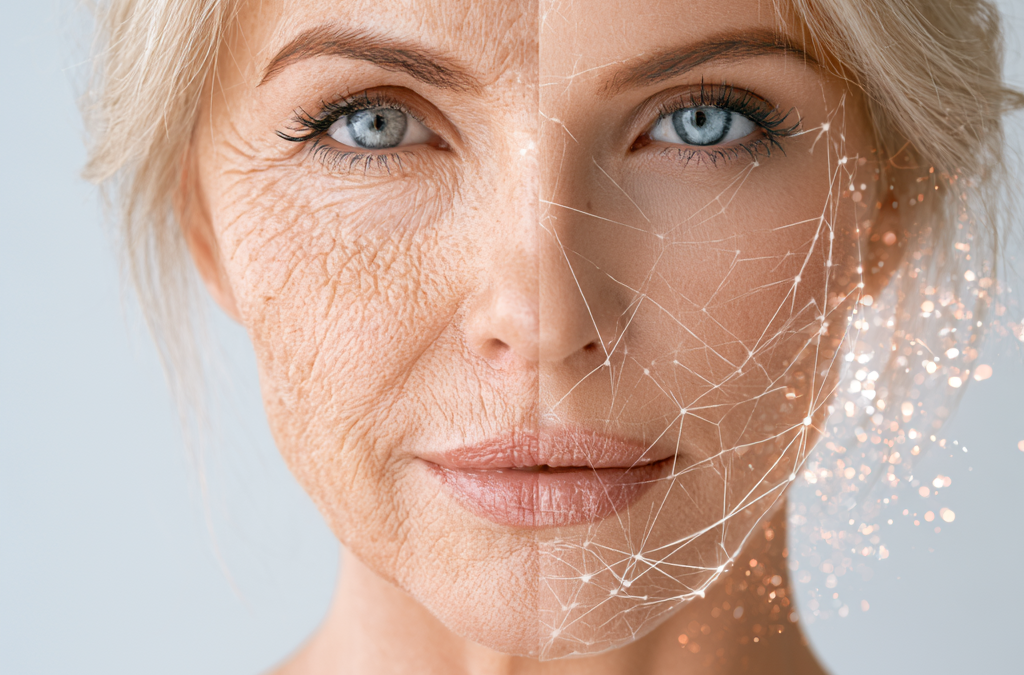
Can AI Help Us Live to 120? The Science of AI-Driven Longevity
The number everyone keeps quoting
One hundred and twenty is the number longevity people can’t stop saying. It sounds like science fiction and like an engineering target at the same time, which is exactly why it sells headlines and raises venture money.
So here is the honest question underneath the headline: can artificial intelligence actually help ordinary people live to 120?
The short answer is that AI is already changing how we study aging, and it may eventually change how long we live, but nobody has shown it can do that yet. The longer answer is more interesting, because the real story isn’t a miracle pill. It’s about measurement, speed, and a very old human wish meeting a very new tool.
Lifespan, healthspan, and the ceiling we keep bumping into
The oldest person whose age has ever been verified is Jeanne Calment of France, who died in 1997 at 122 years and 164 days. Nearly three decades later, her record still stands.
That fact has fueled a long argument. In 2016, researchers at the Albert Einstein College of Medicine argued in Nature that human lifespan probably tops out around 115. Critics pointed out that scientists had named limits before, at 65, 85 and 105, and been wrong each time. A more recent data-driven analysis by demographers lands in between: no hard wall, but a practical one, with Calment’s record likely to fall this century and probably not by more than about a decade.
Which makes 120 a slightly misleading target. Average life expectancy and maximum lifespan are different things, and most of what AI can plausibly do in the near term is about the first one, or better still, about healthspan: the years you spend healthy, mobile and clear-headed.
A person who reaches 95 sharp and independent has arguably won more than someone who reaches 110 in a hospital bed. If AI helps us get there, 120 stops being the point.
Where AI is genuinely moving the needle
Aging research has one brutal problem: it’s slow. If you want to know whether something extends human life, you may wait decades. AI helps in three places, and all three are about shortening that wait.
1. Measuring how fast you’re aging
Aging clocks use machine learning on blood chemistry, DNA methylation, proteins and even medical images to estimate how old your body behaves, as opposed to how many birthdays you’ve had. A team at Edith Cowan University built one called gtAge and tested it on 302 middle-aged adults; the gap between predicted and actual age tracked with markers like cholesterol and blood glucose. Other 2026 work has looked at imaging-based age estimates across several organs and found links to mortality and age-related illness.
The appeal is simple: if a clock moves within months instead of decades, you can test interventions much faster.
2. Finding and designing drugs
The most striking example so far is a drug called rentosertib, made by Insilico Medicine. AI identified the biological target, a protein called TNIK linked to fibrosis, and AI generated the molecule that blocks it. In a Phase IIa trial of 71 patients with idiopathic pulmonary fibrosis, a scarring lung disease, people on the highest dose gained 98.4 mL of lung capacity over 12 weeks, while those on placebo lost 20.3 mL. The company also says it takes about 13 months to get from concept to a preclinical candidate, far quicker than the traditional path.
That is a lung drug, not an anti-aging drug. But in September 2026, a follow-up study in Nature Biotechnology applied six aging clocks to blood samples from some trial participants, and all six showed a lower predicted age after 12 weeks on the drug.
3. Running smarter trials
The quieter idea may matter most. Instead of running a trial just for one disease, researchers can now track aging biology alongside it. Insilico’s own team describes it as studying a therapy’s effects on aging biology next to the disease it was built to treat. That’s how a drug for one condition could quietly become evidence for something bigger.
Where the hype outruns the evidence
No one has shown that AI can make a human being live substantially longer. Even sympathetic reviews say its strongest contributions so far are analyzing data, spotting targets, designing candidate molecules and planning studies. Useful, yes. Immortality, no.
A few reasons to keep your skepticism switched on:
- The hardest tests are still ahead. As of 2026, no AI-designed drug has finished Phase III or reached the market. Earlier analyses found AI-originated compounds clear Phase 2 at roughly the same rate as conventional drugs, around 40%. AI makes the first step faster; biology still gets the final vote.
- A clock is not a life. A drug that lowers a predicted biological age hasn’t been proven to extend anyone’s years. Insilico’s own team is careful on this point: the data doesn’t yet show it adds years to anyone’s life, and a biomarker can be useful in research long before it’s accepted as a stand-in for real outcomes.
- The clocks themselves are still being sorted out. Researchers have noted there was no standard way to compare epigenetic clocks, which is why a 2026 benchmark effort gathered 66 public datasets and tested 13 published models. And “biological age” doesn’t mean one thing: one test may look at DNA methylation, another at blood chemistry, another at proteins or disease risk.
That last point is worth sitting with. A sophisticated model can find patterns, but a pattern alone doesn’t prove it’s measuring aging itself.
What you can actually do with this today
You don’t have to wait for a breakthrough drug to put the science to work. A few grounded ways to use what’s here:
- Treat biological-age tests as a conversation starter, not a verdict. Because different tests measure different things, a number from one lab can’t be compared with a number from another. If you test at all, repeat the same test over time and bring the results to a clinician.
- Put your energy into the levers that already have the strongest evidence. Regular movement, strength, good sleep, not smoking, healthy blood pressure and blood sugar, and real social connection are unglamorous, and they still beat anything you can buy.
- Use AI as a translator, not a doctor. It can explain a lab report in plain language, help you write down questions before an appointment, or summarize what a study found. Then check anything that matters with someone who can examine you.
- Be wary of certainty. Anyone promising to “reverse” your age with a single number, supplement or scan is selling something the research doesn’t yet support.
This is general information, not medical advice. Your own health decisions are worth a conversation with a professional who knows your history.
So, can AI get us to 120?
Maybe, someday, and not on any timeline worth betting on. What AI has really done is take a field that moved at the speed of decades and give it a shot at moving in years. It reads biology at a scale no human team can, proposes drugs in months, and gives researchers early signals about whether something is working.
What it can’t do is skip the proof. Every promising molecule still has to survive trials, and every clock still has to show it means something about how long and how well people live.
The more realistic promise is quieter than 120. It’s a future where more people reach their eighties and nineties still strong, still sharp, still themselves. If AI gets us there, the number on the birthday cake will matter a lot less than the life around it.
Sources
- The maximum human life span (Big Think)
- Human lifespan may have reached a natural limit (RNZ)
- Insilico Medicine and the AI-designed drugs reaching the clinic (ai2.work)
- Insilico’s AI-designed rentosertib shows promise in first phase 2a trial results (Drug Discovery and Development)
- Insilico’s IPF drug demonstrated ‘clinically meaningful’ benefits in trial (Longevity.Technology)
- An AI-generated lung medicine may also cure ageing, trial shows (Business Standard)
- AI may double human lifespans (Fast Company)
- AI could transform longevity research, but human life extension is still unproven (MacMyths)
- Biological age testing: how biomarkers and AI are changing longevity tracking (Analytics Insight)
- AI-powered method combines blood data to measure biological age (LabMedica)
- ComputAgeBench: epigenetic aging clocks benchmark (HSE University)